

Hangzhou as a kingdom: A glimpse of over 1,000 years ago
Did you know that over a thousand years ago, Hangzhou — capital of modern-day Zhejiang province in eastern China — was once the capital of a prosperous and remarkably peaceful realm called the Wuyue (907–978) kingdom?
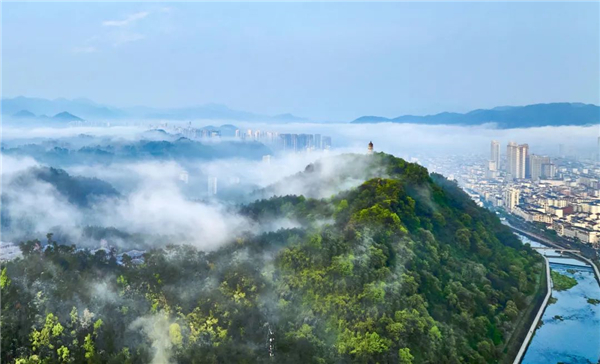
The Lin'an landscape.
After the fall of the Tang Dynasty (618-907) in 907, China entered a period of political fragmentation known as the Five Dynasties and Ten Kingdoms (907-960).
During this time, the Wuyue kingdom was founded by Qian Liu, a native of Lin'an, who became its first ruler.
With its capital in Hangzhou, the kingdom covered much of what is now Zhejiang province and Shanghai, as well as parts of southern Jiangsu province and northern Fujian province.
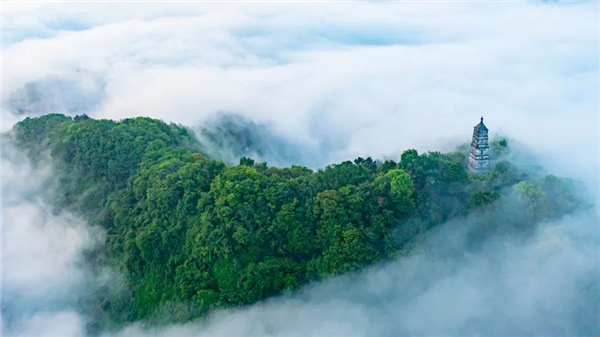
Another example of Lin'an's landscape.
Wuyue was best known for its building of iconic temples, such as the Leifeng Pagoda and Lingyin Temple. Under the Qian family's peaceful leadership, the kingdom became a flourishing center of art and culture, laying the foundation for Hangzhou's later reputation as "Heaven on Earth".
Today, Hangzhou's Lin'an district still preserves the rich legacy of the Wuyue Kingdom, with the Wuyue Cultural Museum as a key destination. On July 26, a great cultural event was held at the museum to bring the story of this fascinating kingdom back to life.
Experts, scholars, international friends, university students and cultural lovers gathered to explore the thousand-year legacy of the Wuyue civilization.
Digital light revives millennia-old treasures
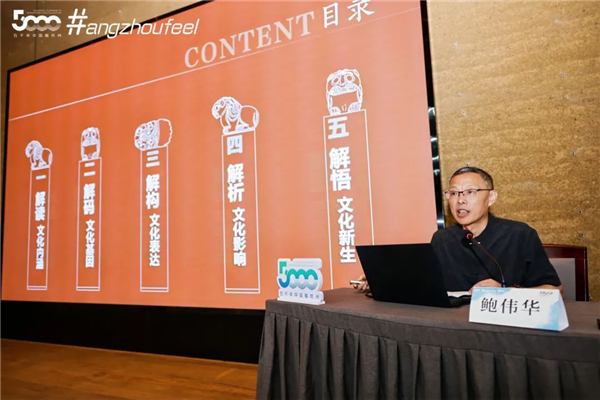
Bao Weihua, the director of the Wuyue Cultural Museum.
Bao Weihua, the director of the Wuyue Cultural Museum, explained that the museum was highlighting the history and culture of the Wuyue Kingdom by focusing on two key themes: "Protecting the land and ensuring the people's safety" and "peacefully surrendering to the Song Dynasty (960-1279)".
These themes reflected Wuyue's unique role in history — safeguarding stability and prosperity in East China during a time of chaos and eventually joining the unified Song Dynasty through peaceful means.
The museum's exhibition showcases 350 cultural relics that serve as evidence of Wuyue's rich civilization.
Yue ware celadon porcelain was said to highlight the peak of craftsmanship in "mud and fire", while silk remains demonstrated Hangzhou's historical role as the "capital of silk".
A glass plate on display also revealed the existence of ancient maritime trade networks. Bao Weihua also emphasized the enduring wisdom of the Qian family motto: "Though our ancestors are distant, we must honor them sincerely; though our descendants may be unlearned, they must study poetry and books".
This spirit of learning and respect helped nurture outstanding descendants such as Qian Xuesen, a great aerospace engineer.
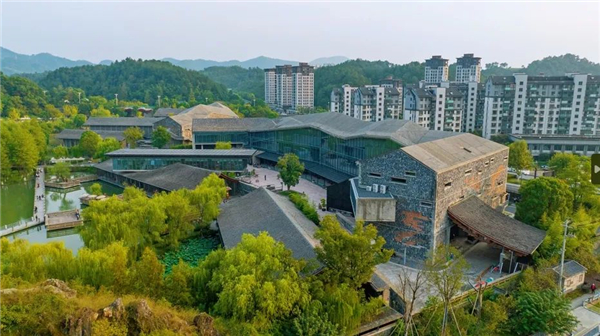
An aerial view of the Wuyue Cultural Museum.
"The core values of Wuyue culture are 'putting people first' and 'serving China with goodwill' — protecting the people and peacefully submitting to the Song Dynasty," Bao Weihua concluded when summarizing the historical significance of Wuyue.
Back in the day, the Wuyue Kingdom actively engaged in foreign diplomacy and maritime trade while promoting internal development, which helped shift China's economic and cultural center southwards and laid a foundation for the Southern Song Dynasty (1127-1279) to establish its capital in Hangzhou.
Leifeng Pagoda witnesses Hangzhou's transformation through time
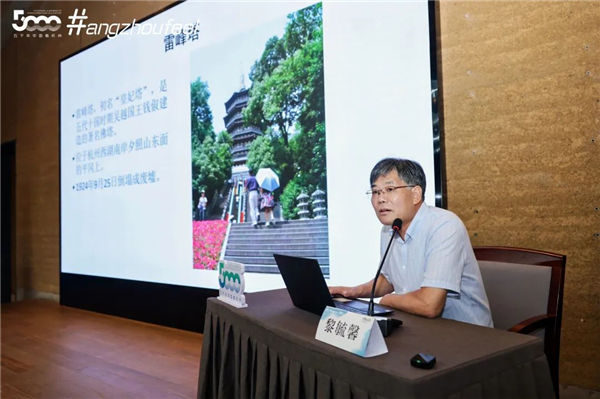
Li Yuxin, research curator and head of the Historical Artifacts Department at Zhejiang Provincial Museum.
Following Bao, Li Yuxin, research curator and head of the Historical Artifacts Department at the Zhejiang Provincial Museum, led the audience back to the excavation site of the Leifeng Pagoda, immersing them in the profound weight of its history.
"Leifeng Pagoda is the first stop for tourists in Hangzhou, with an annual count of 5.4 million visits. It is the soul of the West Lake World Heritage Site," he said.
Built in the year of 977 by Qian Chu, the last king of the Wuyue Kingdom, the pagoda was originally named the Huangfei Pagoda.
"Every artifact unearthed from the underground chamber is a national treasure," Li remarked. A century after the pagoda's collapse in 1924, the 2001 archaeological dig unveiled its thousand-year secrets: 346 relics across 14 categories, including a pure silver stupa of King Ashoka (housing a strand of Buddha's relic hair), a jade boy figurine (a rare Five Dynasties jade carving) and an incised bronze mirror (an innovative craft of Wuyue).
Experiencing Wuyue culture up close with international friends
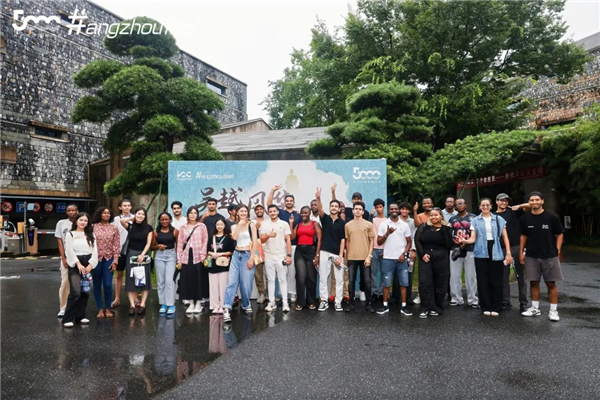
Visiting students get together for a group photo.
The journey gave participants a clear and engaging look at Wuyue culture. It sparked curiosity and a deeper appreciation for cultural heritage among both Chinese and international guests.
"I felt like I was really back in that time," said Shema Christian, a student from Rwanda who is currently studying at Hangzhou Normal University.
He said that he was surprised to learn that the Legend of the White Snake and Leifeng Pagoda, which he had seen in movies, were so closely connected in the very real history of the Wuyue Kingdom.
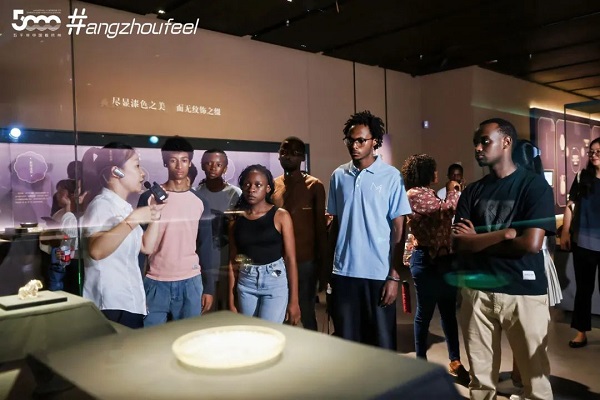
Students listen to an explanation about the artifacts.
Aren't you curious what might surprise you about this fascinating chapter of Hangzhou's history? Come to Wuyue Cultural Museum and see for yourself — there's so much more to discover!
-
Visionary Pathway - Hangzhou Playbook
July 15, 2025