

Gongchen Bridge: From war memories to urban renewal
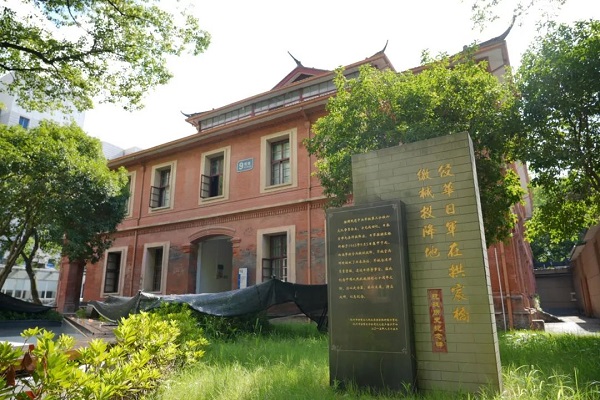
The poignant memorial at the Affiliated Hospital of Hangzhou Normal University marks where Japanese troops surrendered near Gongchen Bridge in 1945. [Photo/hangzhou.com.cn]
At the Affiliated Hospital of Hangzhou Normal University in the Gongshu district of Hangzhou — the capital of East China's Zhejiang province — stands a quiet memorial marking where Japanese troops surrendered near Gongchen Bridge back in 1945.
For years, 73-year-old historian Chen Renmin has pieced together the area's history — stories of teachers, like Song Guangwei who joined the anti-Japanese movement and died at 20 and workers at the local Huafeng Paper Mill who sabotaged equipment rather than yield it to the occupiers.
After the war, the Gongchen Bridge area became an industrial hub, fueling Hangzhou's textiles boom. Later, urban renewal and the Grand Canal conservation project transformed the district — balancing preservation and modernization.
Today, Gongchen Bridge blends history and lifestyles — cafes, parks and cultural spaces thrive where sacrifice and resilience once defined the landscape.
Gongchen Bridge marks the southern-most end of the Beijing-Hangzhou Grand Canal — a vast waterway system first built in the Sui Dynasty (581-618) in the north-eastern and central-eastern plains of China. The artificial water system there marks the largest and most extensive of its kind in the world.
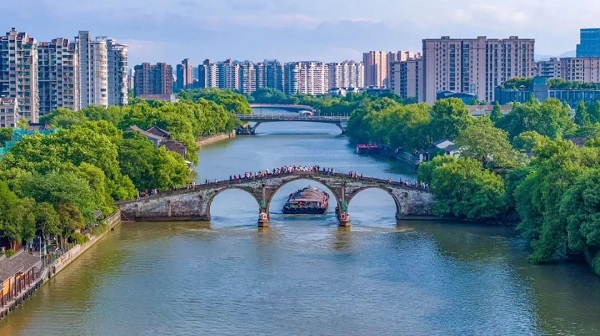
An evocative bird's-eye view of the present-day Gongchen Bridge. [Photo/hangzhou.com.cn]
-

In Zhejiang's capital, 8th Hangzhou International Day opens
September 5, 2025
-
Hangzhou to host UNESCO Biosphere Conference in 30 days
August 25, 2025
-
Nine Hangzhou-based companies make Fortune Global 500 list
July 30, 2025
-
Visionary Pathway - Hangzhou Playbook
July 15, 2025