

Hangzhou to build rocket manufacturing base
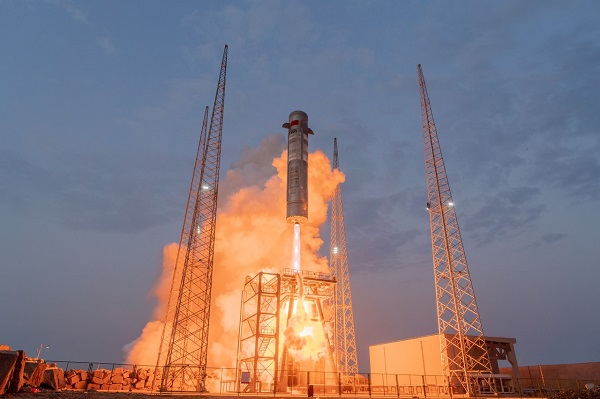
XZY-1 completes a sea-recovery verification mission. [Photo/Tide News]
Hangzhou is entering China's commercial space race with the arrival of Sepoch, whose reusable liquid-propellant rocket program XZY-1 has selected Qiantang district as its manufacturing and recovery base. The project has drawn wide attention across the aerospace sector since early December.
XZY-1 is China's first methane-liquid oxygen stainless-steel rocket designed for sea launch and soft ocean landing. The vehicle has already completed two key sea-recovery verification missions this year, achieving full-cycle launch-recovery-reuse validation. With the Qiantang base now underway, the company is accelerating toward commercial operations.
Sepoch chose Hangzhou from among four shortlisted cities, citing its coastal access to the East China Sea — critical for retrieving first-stage boosters after sea launches — and its growing aerospace ecosystem as the main reasons. Qiantang district hosts an emerging aviation and space manufacturing cluster of more than 30 enterprises and is building a provincial aerospace platform with a planned of over 100 billion yuan ($14.17 billion) in investment.
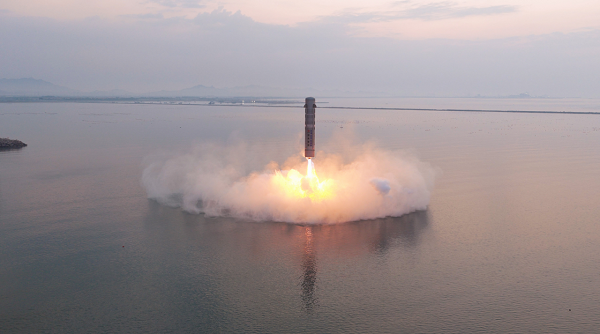
XZY-1 hovers over the sea during a test flight. [Photo/Tide News]
The new base, with a total investment of 5.2 billion yuan, covers 7.2 hectares for the first phase and will support mass production, testing, and rapid reuse of large stainless-steel rockets. Once completed, it will have capacity to assemble up to 25 rockets per year and serve as the hub for high-frequency launches and recovery operations.
The first Qiantang-built XZY-1 is expected to conduct an orbital mission and first-stage sea recovery by the end of 2026. The vehicle is designed to deliver 12 metric tons to the orbit LEO and be reused up to 20 times, integrating technology principles inspired by SpaceX's Starship with independent R&D.
Sepoch's arrival is expected to accelerate Hangzhou's commercial aerospace ambitions, from industrial clustering to satellite applications. The company says the future may see "Hangzhou rockets sending Hangzhou satellites" into orbit.
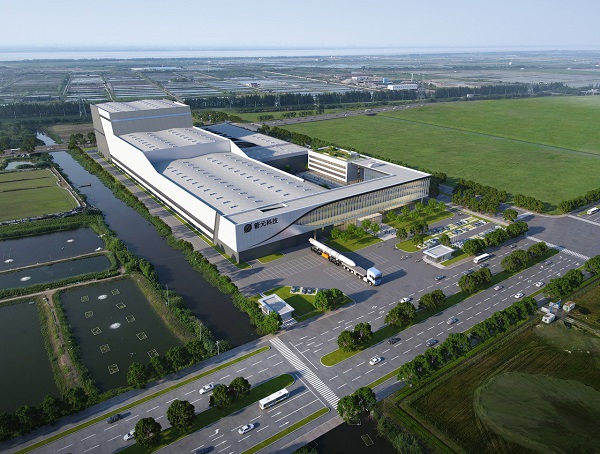
A rendering of the rocket base in Qiantang. [Photo/Tide News]
-
Hangzhou named China's most livable city for 19th consecutive year
December 10, 2025
-
Hangzhou reports steady Jan-Oct economic performance
November 26, 2025
-
Global visitors learn Chinese calendar history at Hangzhou museum
November 14, 2025
-

Global content creators discover Hangzhou's tech magic
December 2, 2025