

Zhejiang solar capacity exceeds 1 kW per capita
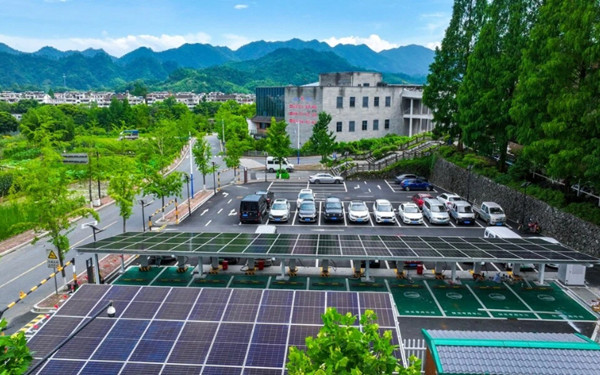
A new energy vehicle charging station integrating solar power and charging facilities is seen in Fenkou town, Chun'an county, Hangzhou, Zhejiang province, on June 22, 2026. [Photo/IC]
Zhejiang province's installed photovoltaic capacity reached 68.9 gigawatts by the end of July, pushing per capita solar capacity above 1 kilowatt, according to data released by State Grid Zhejiang Electric Power on Aug 25.
Zhejiang had 67.01 million permanent residents at the end of 2025. Based on an average annual net population growth of 413,000 over the past three years, per capita photovoltaic capacity had exceeded 1 kW by the end of July.
In the first seven months of this year, Zhejiang generated 41.4 billion kilowatt-hours of solar power, including 33.6 billion kWh from distributed photovoltaic systems. About 82.6 percent of the province's installed solar capacity is distributed across rooftops of factories, public institutions, and residential buildings.
Ningbo has become the first city in China to exceed 10 GW of installed distributed photovoltaic capacity.
From 2026 through 2030, Zhejiang is accelerating the installation of photovoltaic systems wherever conditions permit. New policies extend to large industrial and commercial distributed photovoltaic projects, with a rule that sets no minimum requirement for the annual share of electricity consumed on-site.
Businesses can choose to use the electricity they generate or feed it into the grid, with grid-fed electricity in principle participating in the power market.
-

African participants explore digital technology applications in Hangzhou
August 27, 2026
-
Foreign arrivals to Hangzhou hit 270,000 this year, up 12%
August 21, 2026
-
Hangzhou steps up preparations for 2027 AFC U20 Asian Cup
August 17, 2026
-

Hangzhou's West Lake welcomes first hints of autumn
August 25, 2026