

Revive Hangzhou Summit spirit

SONG CHEN/CHINA DAILY
Global challenges are more complex now than 10 years ago, and the need for constructive multilateralism has never been more compelling
It's been 10 years since leaders of the world's major economies gathered in Hangzhou, capital of East China's Zhejiang province, for the G20 Summit in September 2016. Looking back, the Hangzhou Summit stands out as one of the most productive and forward-looking meetings in the history of the G20. It was a summit that demonstrated the potential of multilateral cooperation at a time when the international community still believed that common challenges could best be addressed through collective action, mutual respect, and shared responsibility.
The Hangzhou Summit took place at a time of cautious optimism. The global economy was still recovering from the after-effects of the global financial crisis, growth remained uneven and productivity was slowing in both advanced and emerging economies. Yet there was also confidence that international cooperation could generate new momentum for sustainable and inclusive development. The summit's theme, "Toward an Innovative, Invigorated, Interconnected and Inclusive World Economy", captured this ambition.
Perhaps more than any previous G20 meeting, the Hangzhou Summit embraced a comprehensive understanding of growth. Economic prosperity was no longer viewed solely through the lens of fiscal and monetary policy. Innovation, digital transformation, structural reform, infrastructure investment and the strengthening of global value chains were all recognized as essential drivers of long-term development. The summit also acknowledged that growth must be inclusive, benefiting all members of society and narrowing, rather than widening, inequalities.
Equally significant was the summit's strong commitment to environmental sustainability. The Hangzhou Summit was held less than a year after the historic adoption of the Paris Agreement on climate change, a landmark achievement that reflected unprecedented international consensus. During the summit, several major economies formally joined the Paris Agreement, providing crucial momentum toward its entry into force later that year. This symbolic and practical alignment between economic policy and climate responsibility marked an important milestone.
Environmental protection was not treated as an obstacle to growth but as an integral component of sustainable prosperity.
The Hangzhou Leaders' Communique reflected this broader vision. It recognized that the global economy faced persistent vulnerabilities and called for the use of "all policy tools — monetary, fiscal and structural — individually and collectively" to achieve strong, sustainable, balanced and inclusive growth. At the same time, it stressed that no single country could solve global challenges alone. International cooperation, open markets, coordinated policies and effective global institutions were presented not merely as desirable ideals but as practical necessities.
The communique also highlighted the importance of supporting innovation and the digital economy. Long before artificial intelligence became a central public concern, G20 leaders recognized the transformative potential of digital technologies while emphasizing the need to ensure that their benefits would be widely shared.
Commitments were made to improve global tax cooperation, combat corruption, strengthen financial regulation, promote quality infrastructure investment, and enhance development opportunities for low-income countries.
Trade occupied a central place in the discussions. The leaders reaffirmed the importance of an open world economy and committed themselves to resisting protectionism. They recognized that international trade and investment remained powerful engines of growth, productivity, innovation, job creation and development. At the same time, they acknowledged that the benefits of globalization had not always been evenly distributed, making domestic policies to support those adversely affected an essential complement to open markets.
The communique also addressed one of the major political developments of the time: the decision of the United Kingdom to leave the European Union following the referendum held just two months earlier. Rather than allowing uncertainty to dominate the agenda, the leaders expressed confidence that the challenges arising out of Brexit could be managed carefully.
Yet history would soon take a different turn. Barely two months after the Hangzhou Summit, the election of Donald Trump as the president of the United States marked a significant shift in international politics. Combined with the Brexit process already underway, it accelerated trends toward economic nationalism, strategic competition and growing skepticism toward multilateral institutions. The consensus that had characterized the Hangzhou Summit became increasingly difficult to sustain.
Over the following decade, geopolitical tensions have intensified. Trade disputes have multiplied. International institutions have found it harder to forge common positions on pressing global challenges. Yet, the COVID-19 pandemic underscored both the necessity of international cooperation and the costs of fragmented responses. Climate change has continued to advance, requiring ever-greater collective action. New technologies have created unprecedented opportunities while simultaneously raising complex questions about governance, security and ethics. The international system has entered a period marked by uncertainty, rivalry and declining trust.
Against this backdrop, the Hangzhou Summit appears not simply as a successful diplomatic meeting but as a reminder of what multilateralism can achieve when political will exists. Its significance lies in the summit's spirit that animated the discussions: a willingness to recognize shared interests despite differing national perspectives; a belief that cooperation produces better outcomes than confrontation; and an understanding that prosperity, sustainability and security are fundamentally interconnected.
The spirit of the Hangzhou Summit, which forged consensus and delivered concrete actions, remains highly relevant today. It does not imply uniformity or the absence of disagreement. Rather, it embodies the conviction that global challenges require global solutions. Whether addressing climate change, financial stability, pandemic preparedness, food security, the energy transition or the governance of emerging technologies, no nation can succeed in isolation. Effective multilateralism does not diminish national sovereignty; it enables countries to exercise their sovereignty more effectively by working together where common interests are at stake.
Reviving the Hangzhou Summit spirit and revisiting its concepts will require renewed commitment from all members of the international community. Trust must be rebuilt through dialogue and respect for international law. Economic openness must be combined with greater resilience and fairness. Climate ambition must remain central to development strategies. International institutions must continue to evolve in order to reflect changing economic realities while preserving the principles of cooperation upon which they were founded.
The challenges facing the world in 2026 are undoubtedly more complex than those confronting leaders a decade earlier. Yet the need for constructive multilateralism has become even more compelling. The aspirations expressed in Hangzhou — fostering an innovative, invigorated, interconnected and inclusive world economy — have lost none of their relevance. If anything, they have gained urgency.
As we mark the 10th anniversary of the G20 Hangzhou Summit, we should remember it not only as an important moment in diplomatic history but also as a source of inspiration for the future.
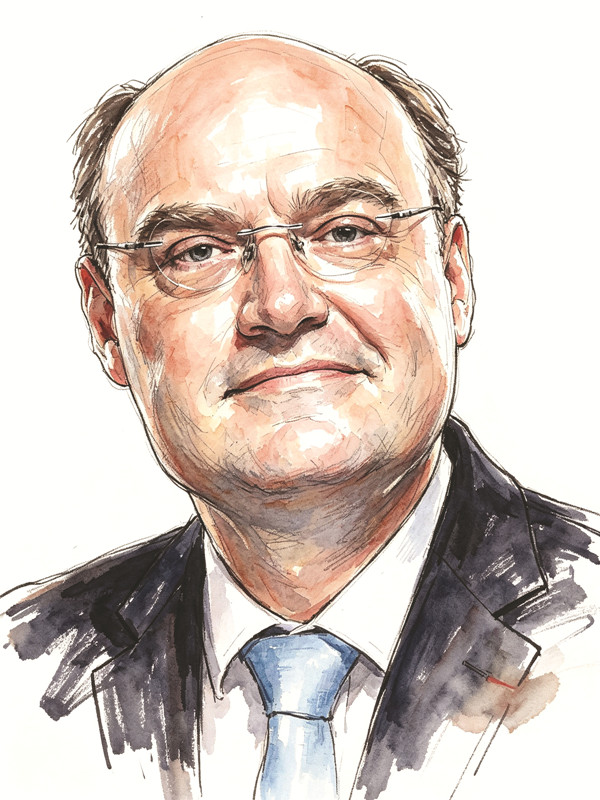
David Gosset
The author is a specialist in global affairs and sinology and the founder of the China-Europe-America Global Initiative.
The author contributed this article to China Watch, a think tank powered by China Daily. The views do not necessarily reflect those of China Daily.
Contact the editor at editor@chinawatch.cn.
-
Przewalski's horses set to return to Xinjiang wild
September 1, 2026
-
African participants explore digital technology applications in Hangzhou
August 27, 2026
-
Foreign arrivals to Hangzhou hit 270,000 this year, up 12%
August 21, 2026
-
Hangzhou's West Lake welcomes first hints of autumn
August 25, 2026