

Liangzhu civilization connects cultures across time and borders
Liangzhu culture, which dates back around 5,000 years, offers important insights into the origins of Chinese civilization and demonstrates the remarkable ingenuity of early human societies.
The 4th Liangzhu Forum has been taking place in Hangzhou, Zhejiang province, from Oct 18 to 20. During the event, international guests from the United States, Australia, Egypt, and Pakistan explored the Archaeological Ruins of Liangzhu City and visited the Liangzhu Museum. They learned about the ancient civilization's achievements and continuity, as well as how digital technology is creating new ways to present and protect cultural heritage.
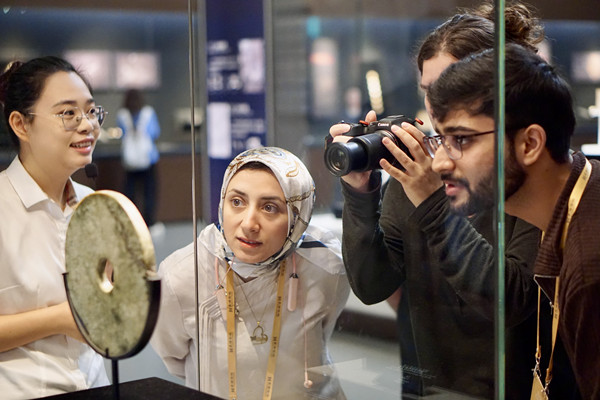
Visitors observe a jade disc at the Liangzhu Museum on Oct 18. [Photo provided to ehangzhou.gov.cn]
Pakistani student Khawaja Muhammad Ali Tayyab described the Liangzhu civilization in one word: "Wisdom." He said he was particularly impressed by the ancient water-management system,
"People from 5,000 years ago were so intelligent. They had already prepared for floods and built such a water system," he noted.
"People from 5,000 years ago could do everything that we can do with the technology that they had available at the time," said Bronwyn Campbell, senior curator of provenance at the National Gallery of Australia. "It's quite exciting to see a site like this where you see a sort of continuity of culture."
Waris Ali from Pakistan saw similarities between the two cultures. "We also have an ancient civilization dating back about 5,000 years called Mohenjo-daro. It's just like Liangzhu. We have similar kinds of civilizations, so that's why I connect with the Chinese people more," he said.
At the Liangzhu Museum, digital technology brings ancient artifacts to life, allowing visitors to explore Liangzhu culture in more immersive ways.
This year, the Liangzhu Museum introduced Rokid AI smart glasses for guided tours throughout the facility. Building on earlier augmented reality (AR) technology, the new AI-powered glasses can recognize exhibits, provide personalized explanations, and answer visitors' questions, allowing them to explore artifacts more interactively and discover the stories behind them.
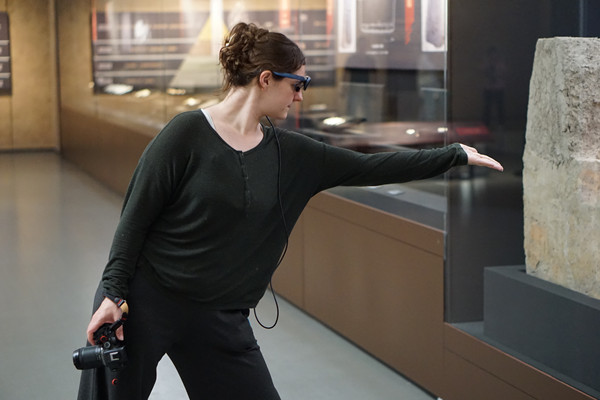
Gabrielle Chen from the US tries out a pair of Rokid AI smart glasses at the Liangzhu Museum on Oct 18. [Photo provided to ehangzhou.gov.cn]
"It is actually impressive for me, how it's like I am in the past, in the history; everything is in my hand," said Khawaja Muhammad.
Ali Farman, a blogger from Pakistan, said, "When I use the AI glasses, it shows how we have mixed modern technology with ancient preservation."
Today, Hangzhou is preserving this cultural legacy through scientific research, digital technology, and public engagement, while fostering connections between ancient civilizations and contemporary life.
"What you've done here in Hangzhou is protect the nature, the people, and the cultural heritage through art, beauty, and an absolute love of the heritage," said Gabrielle Chen, a US photographer.
"When you see something like a metropolis where so many people live and work, and it's right next to a really significant cultural place, you see that beautiful harmony between the people of today and the people of ancient times," said Campbell.
-
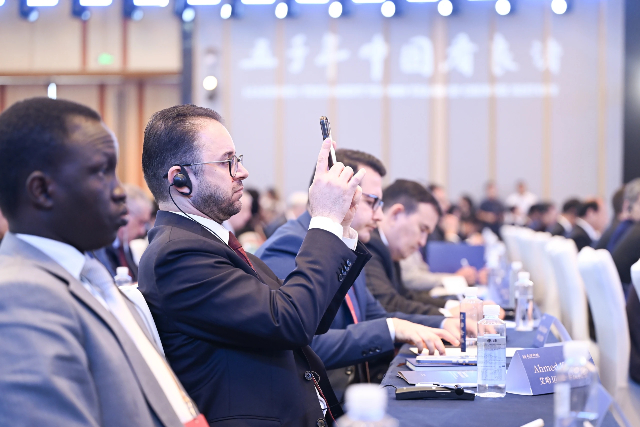
Deeper heritage cooperation urged
October 19, 2026
-
4th Liangzhu Forum opens in Hangzhou
October 18, 2026
-
Three days to go: Rediscover civilization's origins
October 15, 2026
-
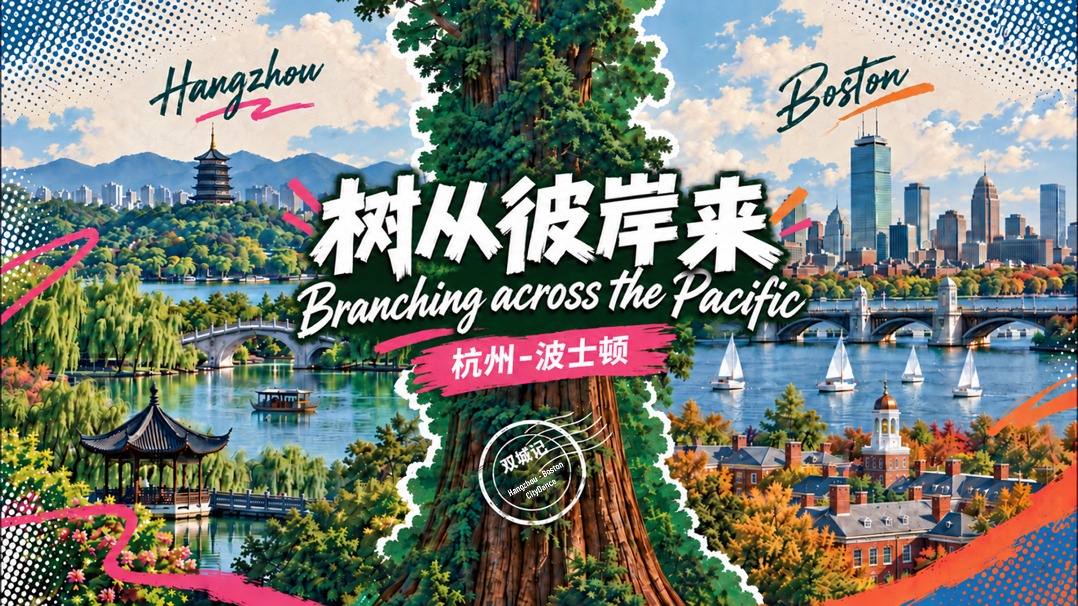
Branching across Pacific: Hangzhou and Boston
September 23, 2026