

A narrow alley, a Hangzhou icon
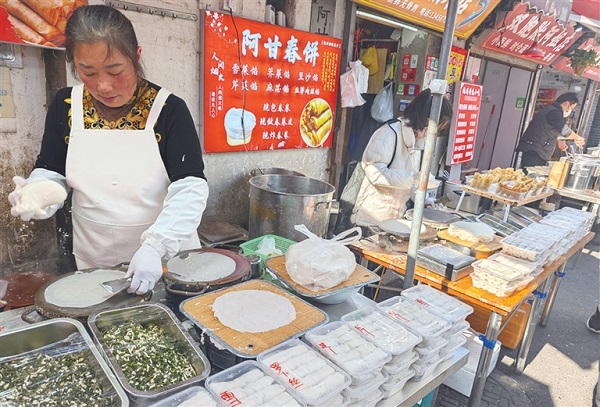
A vendor sells spring rolls with a variety of flavors. [Photo/Hangzhou Daily]
A 200-meter alley has become one of Hangzhou's most recognizable urban symbols, local media outlets reported.
Dama Nong, a narrow lane linking Chayuanqian Alley and Chenghuang Pailou Alley, is known as Hangzhou's last street market.
Dating back to the Southern Song Dynasty (1127–1279), when the imperial cavalry office was located nearby, the alley now draws crowds from early morning to dusk, blending daily life with tourism.
At dawn, it comes alive with a traditional open-air market: vendors sell fresh vegetables, steamed buns, fried dough sticks and local snacks, while longtime shops — many operating for 30 to 40 years — serve signature foods such as crispy fried fish, handmade sweet rice wine, braised duck and lamb. The people, recipes and flavors, locals say, have barely changed.
Despite rapid urban modernization, Dama Nong has not faded. Instead, it has gone viral on social media and become a must-visit stop for tourists seeking an authentic taste of Hangzhou. Visitors often spend hours moving slowly through the short alley, tasting food stall by stall.
Just steps away, modern cafes, music spaces and boutiques offer a quiet contrast, creating a seamless mix of traditional street life and contemporary urban culture. For many residents and newcomers alike, Dama Nong is more than a just market — it is where everyday human warmth, memory and belonging give the city its soul.
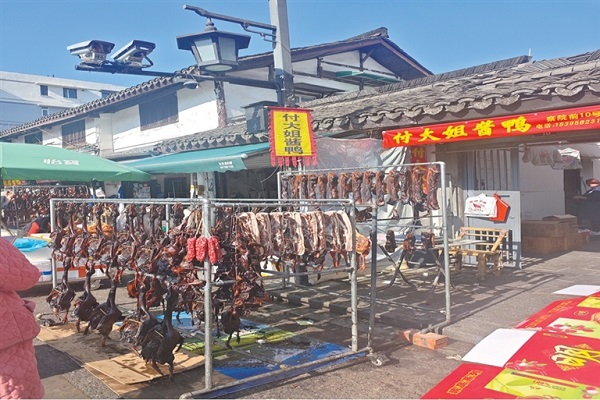
Seasoned ducks are a must-eat for locals in winter. [Photo/Hangzhou Daily]
-

Hangzhou prepares for 147 million cross-regional trips during Spring Festival travel rush
February 3, 2026
-
Chinese cities turn waste into resources for greener future
February 2, 2026
-
From labs to everyday life: Hangzhou's AI moment
January 29, 2026
-

Global content creators discover Hangzhou's tech magic
December 2, 2025