
Hangzhou sets ambitious GDP targets for 15th Five-Year Plan
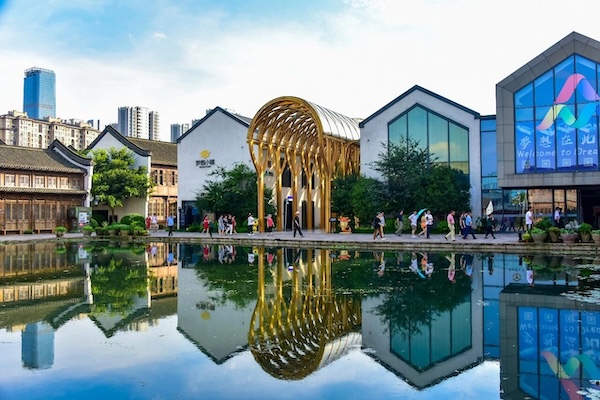
Dream Town, an innovation hub in Hangzhou. [Photo/WeChat account: hzfbwx]
Hangzhou has unveiled its development blueprint for the 15th Five-Year Plan period (2026–30), setting two ambitious targets: to raise GDP to 3 trillion yuan ($441 billion) and lift per capita GDP above $30,000 by 2030, reaching the level of developed economies.
Announced at a provincial press conference on May 19, the plan builds on Hangzhou's achievements during the 14th Five-Year Plan period (2021–25), including hosting the Asian Games, surpassing 2 trillion yuan in GDP, and entering the ranks of China's megacities — all in 2023.
The city outlined a broader vision of making decisive progress toward becoming a world-class modern international metropolis while serving as a leading force in Zhejiang's common prosperity drive.
To reach that goal, Hangzhou identified seven breakthrough areas: becoming China's leading AI innovation hub, building a modern industrial system with local characteristics, fostering new business models and scenarios, advancing common prosperity, accelerating the green and low-carbon transition, deepening cultural integration, and improving scientific, refined and smart urban governance.
The roadmap also highlights six priorities: high-quality growth, innovation-driven development, deeper reform and opening-up, cultural prosperity, ecological sustainability, and people-centered development, with continued investment in education, healthcare, elderly care and childcare services.
Hangzhou aims to accelerate its shift from the platform economy of the internet era toward an AI-powered intelligent economy and strengthen its role as a globally connected innovation city.
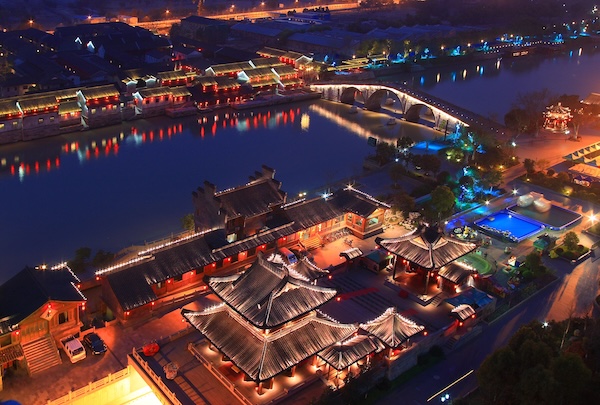
A bird's-eye view of Hangzhou's Gongchen Bridge, the southernmost end of the Beijing-Hangzhou Grand Canal, a UNESCO cultural heritage site, at night. [Photo/WeChat account: hzfbwx]