

Reusable rocket breakthrough boosts Hangzhou's commercial space ambitions
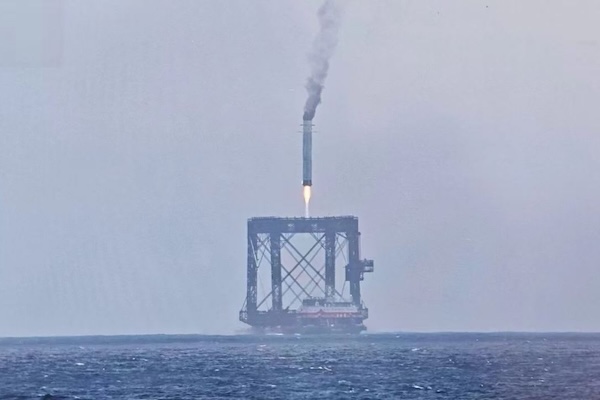
China's Long March-10B rocket completes its first-stage recovery on July 10. [Photo/Tide News]
China's Long March-10B rocket completed its first-stage recovery on July 10, marking the country's first controlled recovery of a launch vehicle stage and the world's first net-assisted rocket recovery.
The breakthrough could accelerate the development of commercial spaceflight by reducing launch costs, increasing launch capacity and enabling more frequent missions.
Hangzhou's Xihu district is already positioning itself to capture opportunities across the space industry. At Yunqi Town, the China Academy of Space Technology has established 15 production lines capable of supporting about 300 satellites annually, with cumulative output value nearing 1.8 billion yuan ($266 million).
The town is also home to the Dongfanghong Curated Supermarket, which offers more than 300 satellite components, software products and related services covering much of the industry chain.
Xihu is now home to more than 300 commercial space-related companies and is developing an ecosystem integrating AI, satellite manufacturing, data applications and space computing.
As reusable rockets lower launch costs and advanced manufacturing speeds up satellite production, Hangzhou is betting on a new frontier — from cloud computing to space computing.
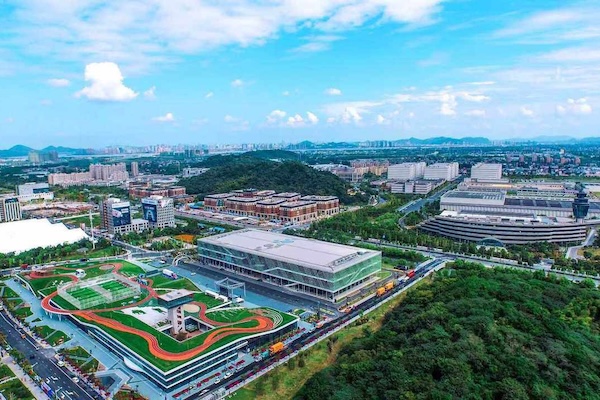
A bird's-eye view of Yunqi Town in Hangzhou. [Photo/Tide News]
-

Robots stepping into real world in Zhejiang
July 31, 2026