

Artists bring new life to Hangzhou's village
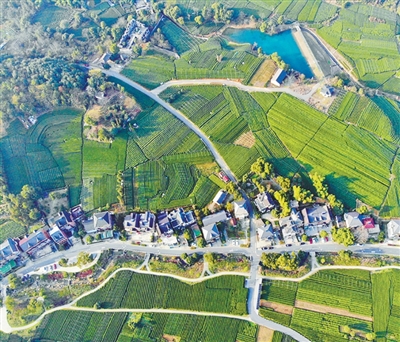
An aerial view of Changdai village. [Photo/Hangzhou Daily]
Changdai village in Hangzhou's Xihu district has spent 17 years using art education to fuel cultural tourism and rural development.
Since 2010, the public art initiative in Changdai village has grown from one classroom serving six children into a major program that has trained more than 1,000 people. More than 50 former students have taken part in China's art college entrance examinations, with over 10 pursuing careers in the arts.
The program was launched by Li Xiuqin, a professor at the China Academy of Art, and her husband, Guo Lianxun. They began offering free summer classes in painting, calligraphy, and other subjects to local children in 2010.
The program later expanded to woodworking, pottery, and traditional Chinese culture. In 2018, the village began managing the program, turning what began as a personal project into a community initiative. Young artists have since introduced new approaches, including ecological art and activities inspired by intangible cultural heritage.
Art has also transformed the village itself. More than 300 artists now live and work in the area, converting old tea houses and rural homes into studios and creating a series of artworks throughout the village.
In 2025, Changdai received 892,600 visits, up 20 percent year-on-year, while tourism-related revenue reached 85.65 million yuan ($12.7 million).
The village has become one of Zhejiang's first 18 model villages for art education, showing how culture can support rural tourism, creative industries and shared prosperity.
-

Robots stepping into real world in Zhejiang
July 31, 2026