

Millennia of literary heritage rekindles Hangzhou's poetic charm
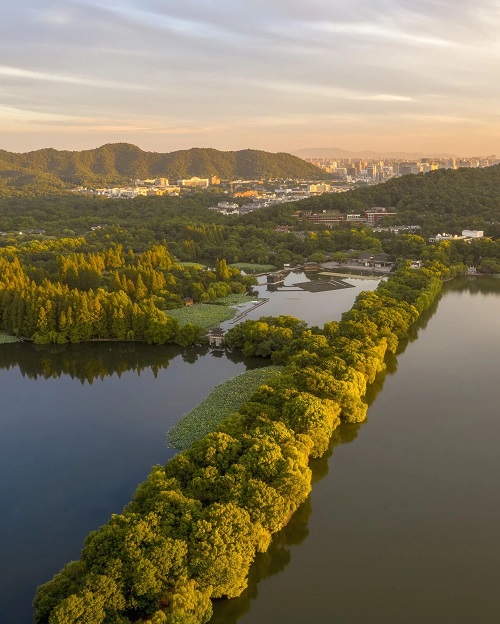
The Bai Causeway over West Lake. [Photo/WeChat account: visithangzhou]
Hangzhou, long hailed as the poetic heart of Jiangnan, continues to resonate culturally with verses written over a millennium ago.
From winding lanes and arched bridges to the shimmering waters of West Lake, the city's identity has been shaped as much by its literature as by its landscapes.
Among the poets who immortalized Hangzhou, Bai Juyi (772–846) stands out. It was he who first popularized the name West Lake in his poetry during the Tang Dynasty (618–907). Prior to that, the lake had been known by other names, including Qiantang Lake.
In more than 200 surviving poems about Hangzhou, Bai depicted scenes that remain recognizable today — from spring strolls along the Bai Causeway to the surging tides of the Qiantang River and the serenity of Lingyin Temple.
Serving as governor of Hangzhou, Bai was not only a poet but also a pragmatic administrator. He oversaw the dredging and reinforcement of West Lake's embankments, increasing water storage and improving irrigation. The structure later known as the Bai Causeway stands as both an important hydraulic project and a cultural landmark.
Years after leaving Hangzhou, the aging poet, nearly blind, penned the famous line: "Of Jiangnan I recall most fondly is Hangzhou." The verse has since become one of the city's most quoted tributes, echoing across centuries as a testament to Hangzhou's enduring poetic spirit.
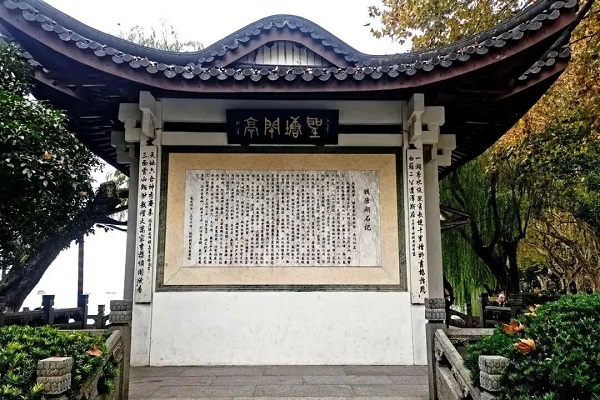
Bai's governance of West Lake is inscribed on a monument by the lake. [Photo/WeChat account: visithangzhou]
-

Merz visit highlights opportunities
February 27, 2026
-
Hangzhou logs 19.74m tourist visits during Spring Festival holiday
February 24, 2026
-
Foreign visitors pack 'the future' into their suitcases in Hangzhou
February 14, 2026
-

Global content creators discover Hangzhou's tech magic
December 2, 2025