

Technology and tradition reshape West Lake Longjing
Tea growers and processors around West Lake in Hangzhou, Zhejiang province, are adopting livestreaming, drones, and smart factories while preserving hand-frying techniques that remain central to the identity of West Lake Longjing tea.
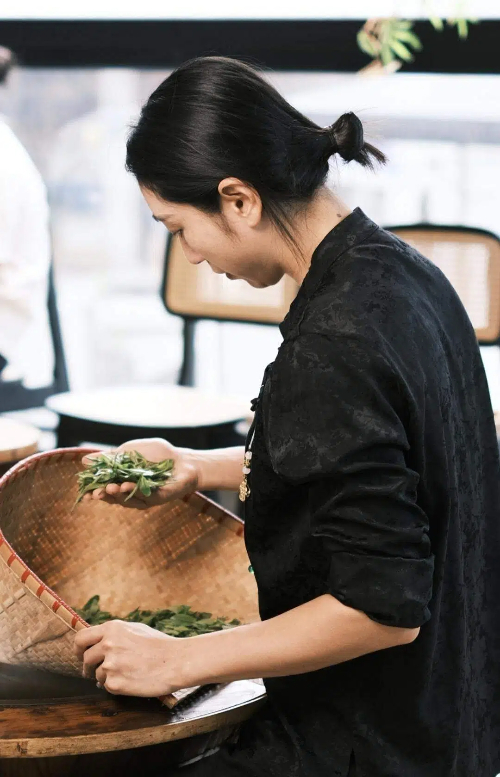
Fu Xiaoting checks tea leaves in Longjing village, Hangzhou, Zhejiang province, during the spring tea season. [Photo provided by Fu Xiaoting to Tide News]
In Longjing village, Fu Xiaoting, a tea producer born in the 1990s, uses livestreaming to sell tea and explain production techniques to online viewers. Fu prices her handmade Longjing at 24,000 yuan (about $3,470) per kilogram, which she described as a middle-range market price, but said output remains limited because fully handmade processing is labor-intensive.
Fu spent three years training in tea frying in the village and later won honors, including the title of outstanding tea maker in Zhejiang in 2024 and the championship of a provincial Longjing tea-frying competition in 2025. She said livestreaming helps expand sales, but also introduces tea knowledge to consumers in places far from Hangzhou.
Tea companies are increasingly using technology to improve production efficiency. Hangzhou West Lake Longjing Tea Co has developed a digitized factory that draws on the expertise of veteran tea makers by converting their hand-frying techniques into machine parameters. According to the company, the goal is to scale up production while preserving the flavor and process standards of traditional Longjing tea.
This spring, the company also began using drones to transport freshly picked leaves. Each drone can carry up to 150 kilograms, and a downhill trip of 2 to 3 kilometers takes about five minutes, helping reduce the risk of leaves turning red due to delays in transport.
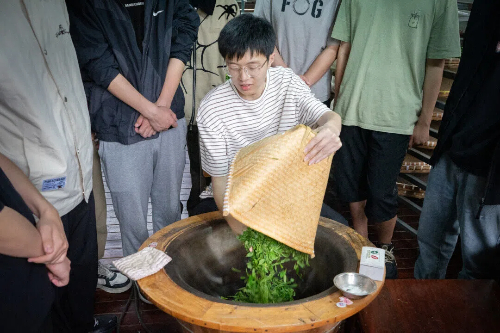
Wang Wenbo stir-fries tea leaves in Longjing village, Hangzhou. [Photo provided by Wang Wenbo to Tide News]
Even so, hand-frying remains the benchmark for many growers. Wang Daping, 70, has been frying tea since he was 16 and still believes hand processing produces an aroma distinct from machine-made tea. His son, Wang Wenbo, born in 1999, has been learning the craft for three years and sees it as essential if he is to take over the family business.
Local growers often say it takes about three years to master the first firing stage and another five to perfect the finishing process. This helps explain why training the next generation remains as important as adopting new technology.
-

Global Fortune 500 firms eye Hangzhou's robot industry ecosystem
March 23, 2026
-
China's import push offers opportunities
March 16, 2026
-
Global goods expo to boost imports and consumption in Hangzhou
March 13, 2026
-

Global content creators discover Hangzhou's tech magic
December 2, 2025