
Hangzhou's 'invisible strategy' drives platform economy growth
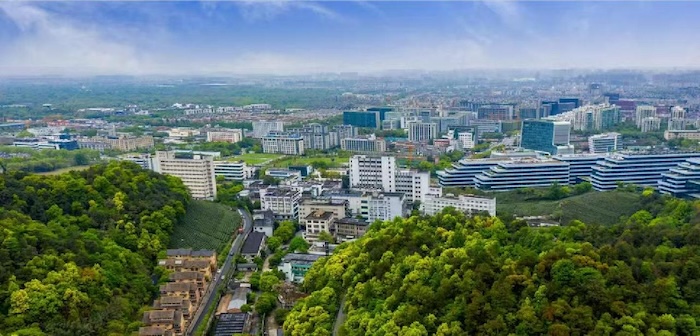
A bird's-eye view of Xihu district in Hangzhou. [Photo/Tide News]
Hangzhou's government service efficiency has recently drawn praise from motorcycle rider-entrepreneur Zhang Xue, highlighting the city's strategic efforts to foster a robust innovation ecosystem.
His remarks came as Xihu district hosted a platform economy industrial ecosystem conference on April 2, bringing together more than 100 representatives from platform enterprises, supply chains, research institutions and investment organizations to explore the sector's transition from consumer internet to the industrial internet.
Platform enterprises play a pivotal role in Xihu district's modern industrial system. The district is home to more than 80 platform companies, generating over 240 billion yuan ($33 billion) in revenue in 2025, with leading levels of research and development investment.
To support further growth, the district has introduced a consultant-style service model, forming a high-level advisory panel comprising industry leaders such as Ant Group and Alibaba Cloud, along with top universities and think tanks. The initiative aims to provide tailored support for enterprises at different development stages, from financing and compliance to global expansion.
Demonstrating policy agility, Xihu district also launched Hangzhou's first token vouchers on March 26, offering companies access to computing power and AI model resources. The swift rollout — from policy research to implementation within weeks — exemplifies the kind of efficiency praised by Zhang.
By integrating capital, technology and real-world application scenarios, Hangzhou is building an innovation ecosystem that enables businesses to scale from laboratory breakthroughs to market success.

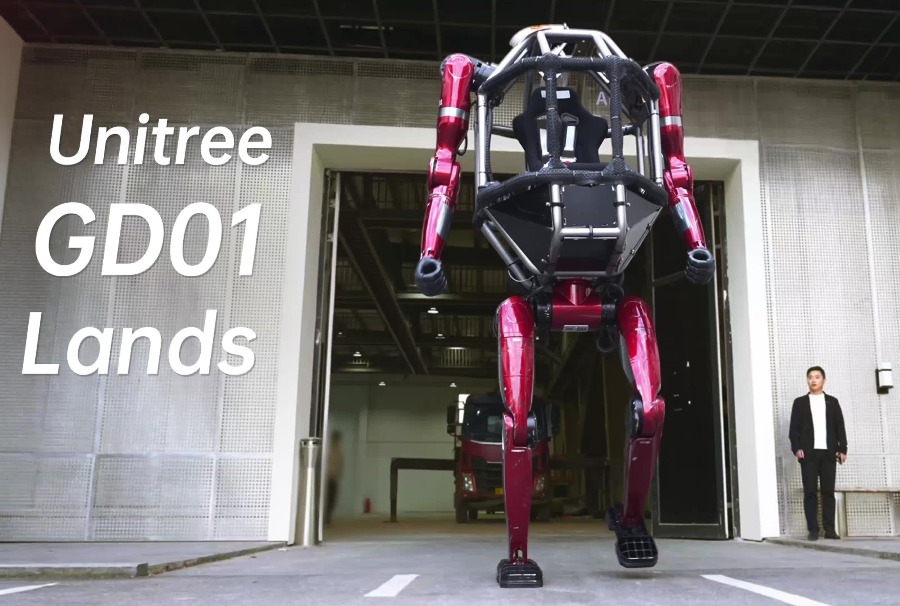
A member of staff from a humanoid robot company in Xihu district introduces her firm's products to foreign visitors. [Photo/Tide News]
-
CICAF 2026 opens as Hangzhou advances vision of animation hub
June 17, 2026
-
China Intl Cartoon & Animation Festival opens in Hangzhou
June 15, 2026
-
Hangzhou emerges as a global innovation, diplomacy hub
June 10, 2026