

Tea science pioneer Chen Zongmao: One life, one passion, one cup of tea
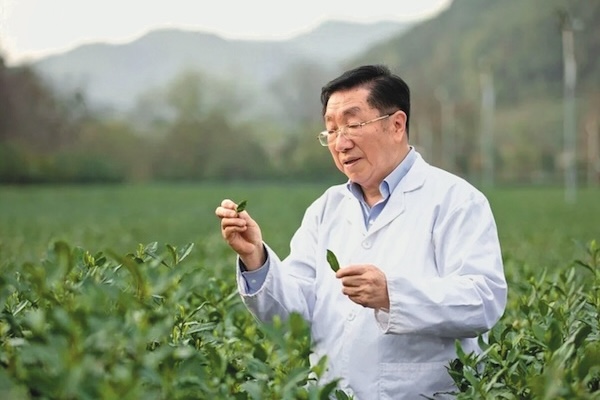
Chen studies pest patterns at a tea plantation in Hangzhou. [Photo/Tide News]
Chen Zongmao, China's first academician in the tea science field at the Chinese Academy of Engineering, has devoted more than six decades to a single pursuit: tea.
Born in Shanghai in 1933 with ancestral roots in Zhejiang's Haiyan, a county administered by Jiaxing, Chen is a leading tea plant protection expert and former director of the Tea Research Institute of the Chinese Academy of Agricultural Sciences in Hangzhou. He is widely recognized for pioneering research on pesticide residues in tea and ecological pest control, reshaping both domestic and international standards for tea safety.
Throughout his career, Chen has helped establish 18 national standards and five ministerial standards for pesticide use, and led a laboratory later recognized by the European Unions as the only approved facility for Chinese tea exports to Europe. He has also edited major reference works including The Chinese Tea Encyclopedia.
For Chen, tea is both science and philosophy. His well-known saying reflects his lifelong focus: "Drinking tea for one minute quenches thirst; for one hour brings leisure; for one month improves health; for a lifetime brings longevity."
Even in his 90s, Chen remains active in research and fieldwork. At the Tea Research Institute in Hangzhou's Xihu district — where he has worked for 66 years — he continues to visit tea plantations, study pest patterns, and read scientific literature daily.
Chen's work has also influenced global trade standards. In 2010, he challenged international pesticide residue rules that treated tea like directly consumed food. By demonstrating that chemical residues in tea leaves do not fully transfer into brewed tea, he helped establish a tea infusion principle, which was later adopted in international food standards, improving fairness for tea-exporting countries.
Beyond safety, Chen's research also advanced ecological pest control and tea's health functions, contributing to a significant reduction in pesticide overuse in China's tea industry.
Now 93, Chen often describes tea as a lifelong companion rather than a subject of study. "Tea is not medicine," he said, "but a way of life."
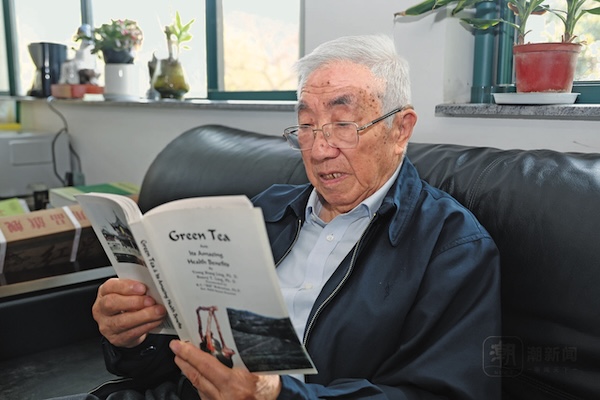
Chen reads an English book related to tea. [Photo/Tide News]
-

Global content creators discover Hangzhou's tech magic
December 2, 2025