

Hangzhou's AI computing power ranks 2nd in China
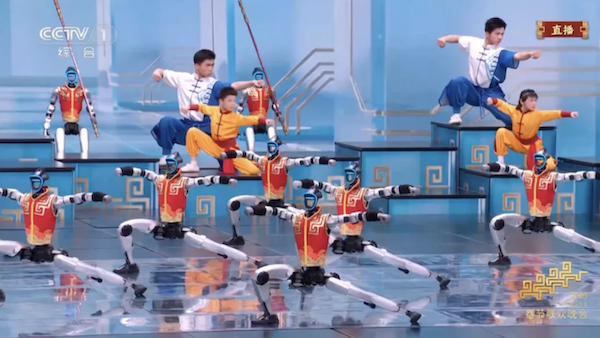
Humanoid robots developed by Unitree Robotics perform at China's Spring Festival Gala of the Year of the Horse. [Photo/Tide News]
Hangzhou has reported that its total intelligent computing (AI computing) capacity has reached 56 quintillion operations per second (10¹⁸ floating-point operations), placing it second nationwide, according to officials.
The figure was announced at a press conference on the construction of the China (Zhejiang) Pilot Free Trade Zone held on April 20 in Hangzhou. The metric refers to the overall scale and performance of AI computing resources in a region and is a key benchmark for advanced computing infrastructure.
According to Hangzhou's municipal bureau of commerce, the city now hosts 395 major AI enterprises, with the industry generating 460 billion yuan ($67.6 billion) in revenue, up 23.1 percent year-on-year.
Officials said Hangzhou's rapid AI growth is supported by strong policy innovation, including China's first local regulation promoting embodied AI robotics and the first municipal-level data circulation and trading law.
The city has also established multiple national-level AI pilot bases. These include a medical AI testing base in Xiaoshan district, where Ant Group's healthcare model has become one of the world's largest open-source medical AI systems by parameter size, and an embodied intelligence base in Binjiang district focused on high-quality data sets and computing infrastructure.
Hangzhou is also expanding its global AI ecosystem. Its open-source platform ModelScope ranks first in China and second globally, with over 20 million developers and 130,000 models. Major Chinese models such as DeepSeek and Alibaba's Qwen rank among the world's most-used large models on global platforms.
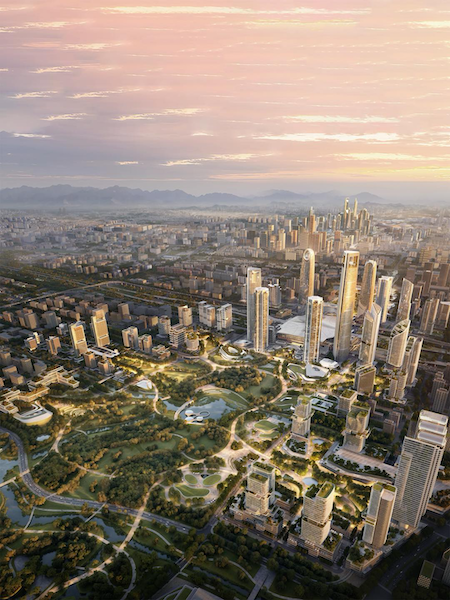
A rendering of Hangzhou's new CBD. [Photo/Tide News]
-

Global content creators discover Hangzhou's tech magic
December 2, 2025