

Hangzhou first, future forward: Pakistan PM's China visit begins
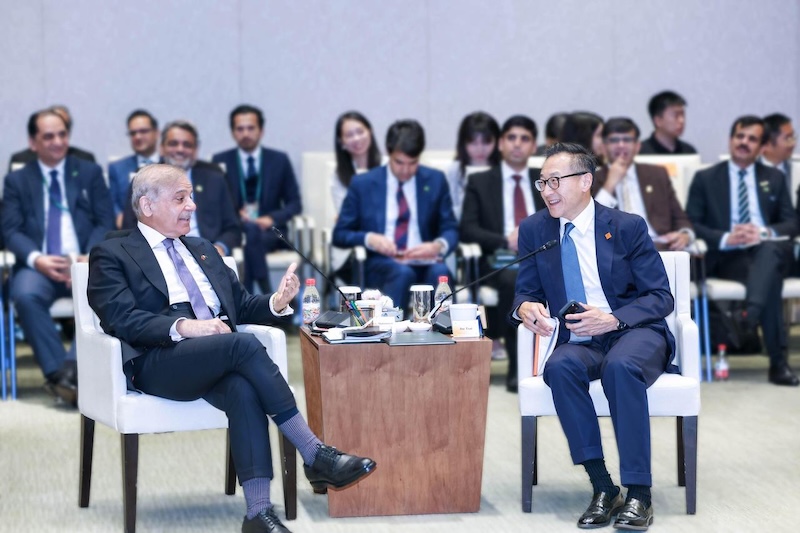
Pakistani Prime Minister Shehbaz Sharif talks with Joseph Tsai, chairman of Alibaba Group. [Photo/Tide News]
When Pakistani Prime Minister Shehbaz Sharif arrived in Hangzhou on May 23, his choice of destination drew attention: instead of beginning in Beijing, he opened his four-day China visit in one of the country's leading hubs for digital economy and innovation.
The decision reflected Pakistan's shifting cooperation priorities under the upgraded China-Pakistan Economic Corridor, moving beyond infrastructure toward industrial upgrading, technology and talent development.
During his two-day stay in Hangzhou, Sharif attended the China-Pakistan B2B Investment Summit, met business leaders and visited Alibaba Group headquarters.
At the summit, Sharif called for deeper cooperation in agriculture, digital economy, artificial intelligence, special economic zones and mineral development. The visit also resulted in multiple business agreements involving Alibaba's international business, cloud computing and research arms, alongside Pakistani institutions.
Among the announced initiatives, Alibaba's international platform will support digital and AI training for 10,000 small and medium-sized enterprises from Pakistan, while cloud and AI cooperation aims to strengthen local digital infrastructure and expand technology applications in the South Asian nation.
The visit aligns with Pakistan's broader economic agenda. Islamabad has identified information technology and AI as strategic growth sectors. It previously announced plans to accelerate investment in emerging technologies and industrial transformation.
Beyond tech, Zhejiang's long-standing engagement with Pakistan is already visible across infrastructure and manufacturing.
Projects linked to Zhejiang enterprises include the 392-kilometer Sukkur-Multan motorway segment, one of the landmark transport projects under the China-Pakistan Economic Corridor, which has significantly reduced travel time across Pakistan's economic corridor.
Private firms from Zhejiang are also expanding in sectors such as renewable energy. Chinese solar manufacturers have increased their footprint in Pakistan's fast-growing rooftop solar market, responding to local demand for more reliable and affordable energy solutions.
The visit also highlighted growing people-to-people ties. Zhejiang and Pakistan signed agreements covering provincial exchanges and education cooperation, while vocational institutions are expanding digital skills and e-commerce training programs for Pakistani students and workers.
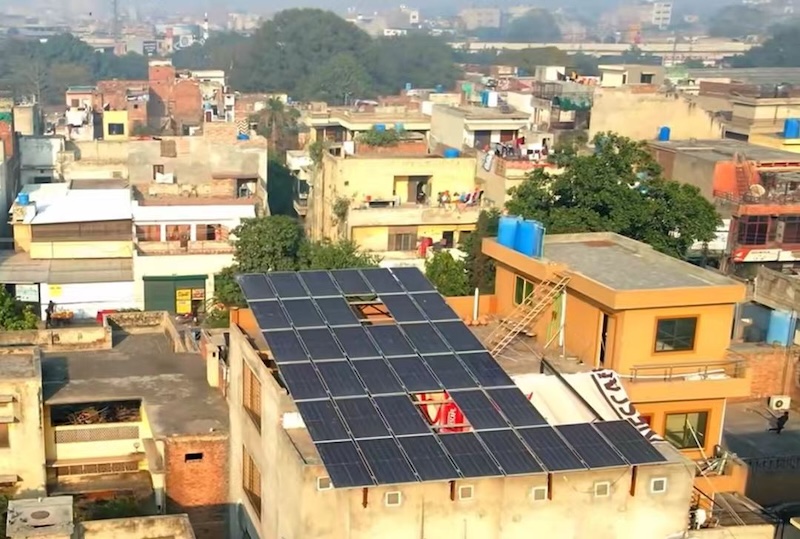
Photovoltaic panels developed by a Zhejiang company are applied in Pakistan. [Photo/Tide News]