

Eastern philosophy flows through China pavilion at Malta Biennale
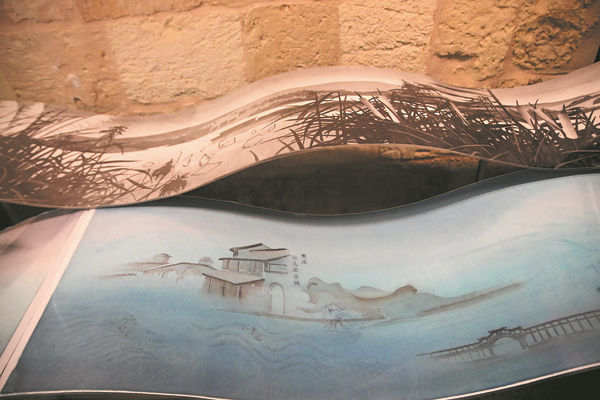
One of the works at Malta Biennale, Reeds and Autumn Waters, a woodblock print of Xu Chentao. [Photo provided to China Daily]
Built in the 16th century, Fort St Elmo, at the tip of Malta's Sceberras peninsula, once bore witness to the conflicts and occupations of different civilizations in the country's diverse history. These days, this heritage site in Valletta — also home to the National War Museum — has become a stage for cultural diversity, serving as one of the locations for the ongoing Malta Biennale.
Works from around the world have been gathered on the Mediterranean Sea archipelago and are on show at thematic exhibitions and national pavilions from March 11 to May 29.
Launched in 2024, the biennale turns the Maltese islands into a melting pot of international artistic creativity.
For the second time, Chinese artists are sharing a presence at the event, with a variety of works on display at the Chinese pavilion that are imbued with an Eastern philosophical take on water, addressing this year's theme, "Clean, Clear, Cut".
The theme of the Chinese pavilion — The Realm of Clarity: Ecological Foresight and Civilizational Exchange in Oriental Wisdom — centers on water as a medium for cultural exchange. In Chinese cultural tradition, water also carries symbolic meaning, encouraging reflection on the self and on relationships with others, society and nature, according to Ying Jinfei, curator of the Chinese pavilion and director of Zhejiang Art Museum. Most of the works on display come from the collection of the museum in Hangzhou, capital of the coastal province of Zhejiang.
"The Taoist concept of shang shan ruo shui (the highest good is like water) regards water as a dual symbol of life and morality — water nourishes all things without contention and adapts its form to the terrain," he says, adding that the works shown by 13 artists offer a reflective perspective on the connectivity and inclusiveness of water in the systems of both ecology and human society.
Many of the featured artists have long worked with the traditional technique of water-based woodblock printing which integrates painting, engraving and printing. Using wooden blocks as plates and water-soluble pigments, the technique re-creates on printed paper the distinctive texture of brushstrokes.
-
China's import push offers opportunities
March 16, 2026
-
Global goods expo to boost imports and consumption in Hangzhou
March 13, 2026
-
Hangzhou charts new path for global cultural exports
March 11, 2026
-
Global content creators discover Hangzhou's tech magic
December 2, 2025